Walking Behind Seljalandsfoss (and Finding Gljúfrabúi Next Door)
A guide's take on the path behind Seljalandsfoss, why you get soaked, and how to find the hidden Gljúfrabúi waterfall tucked in a mossy canyon a short walk north.
 By Björn Einarsson, Iceland South Coast tour guide and local specialist
Before you read on
Seljalandsfoss is the first big stop of the small-group day, and its hidden neighbour Gljúfrabúi is reachable in your free time there. Booking options are at the end of this guide. See the booking options ↓
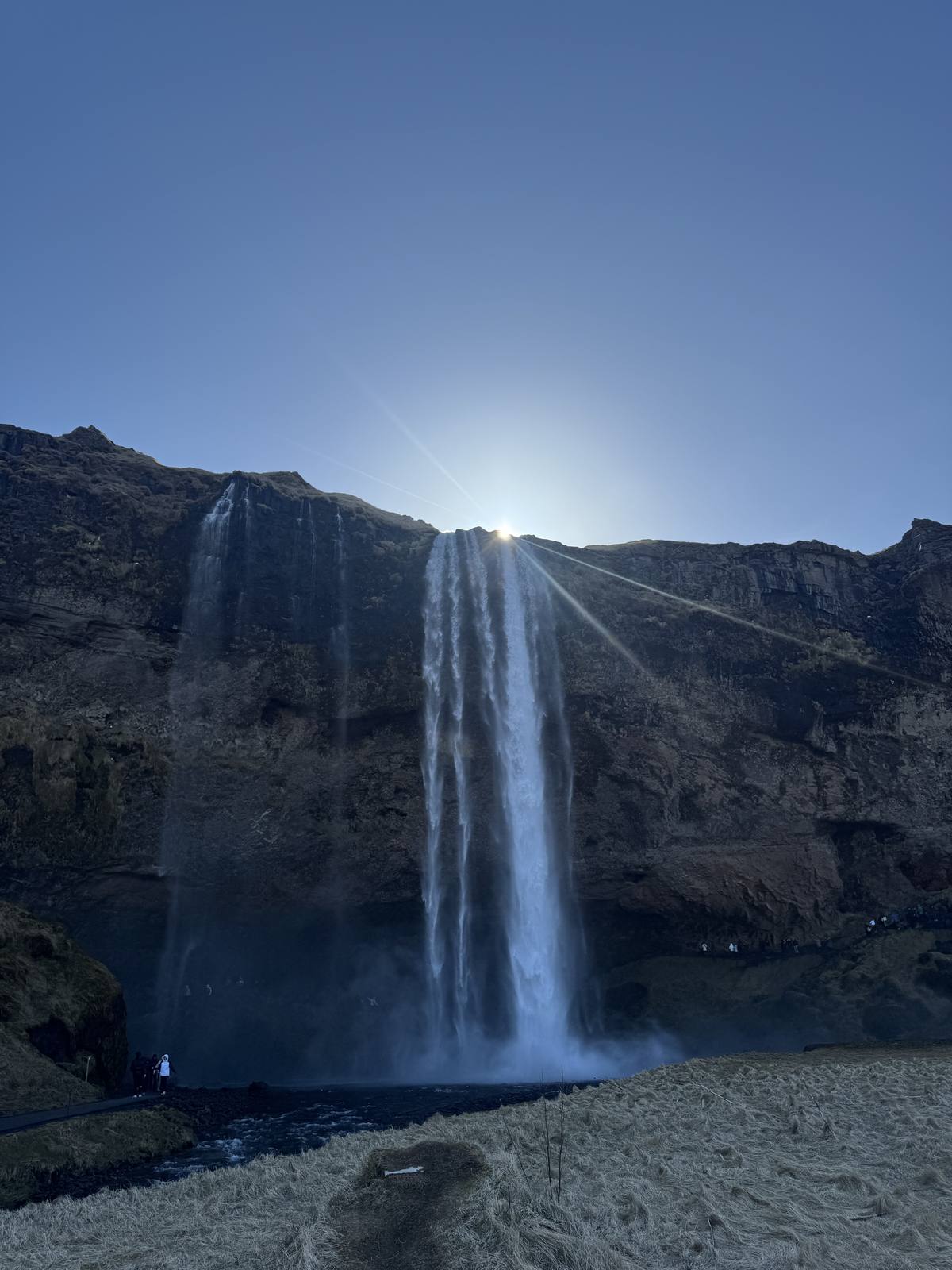
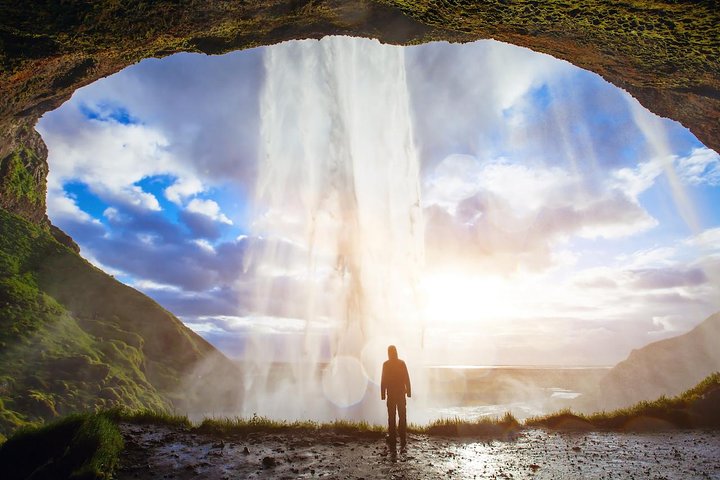
The first thing that hits you at Seljalandsfoss is not the view. It is the spray, drifting sideways off the water and finding you while you are still walking up from the parking area. This is the one waterfall on the South Coast you can walk clean behind, and the path that curves into the gap between the cliff and the falling water is the reason it stays on almost every itinerary. It is also the reason you arrive back at the minibus looking like you swam there.
I have guided this stretch of coast since 2022, and I still watch the same thing happen every departure. People step off in a nice sweater, leave the rain jacket on the seat, and fifteen minutes later they are wringing out a sleeve. The water does not care what your phone says the forecast is.
Can you really walk behind Seljalandsfoss?
Yes. Seljalandsfoss drops about 60 metres off an old sea cliff, and a worn footpath loops behind the curtain of water from one side to the other. The steps are steep, slick and often running with meltwater, so you go slowly, use your hands on the rock, and accept that the spray will soak you within seconds.
You climb a set of stone and dirt steps up the right side, pass directly behind the water, and come down the far side. It is short. It is also uneven, and that far side stays wetter and darker, so take your time on the descent especially. The full 60-metre drop and the path that runs behind it are what make this fall different from every other stop on the route: most you admire from the front, this one you stand inside.
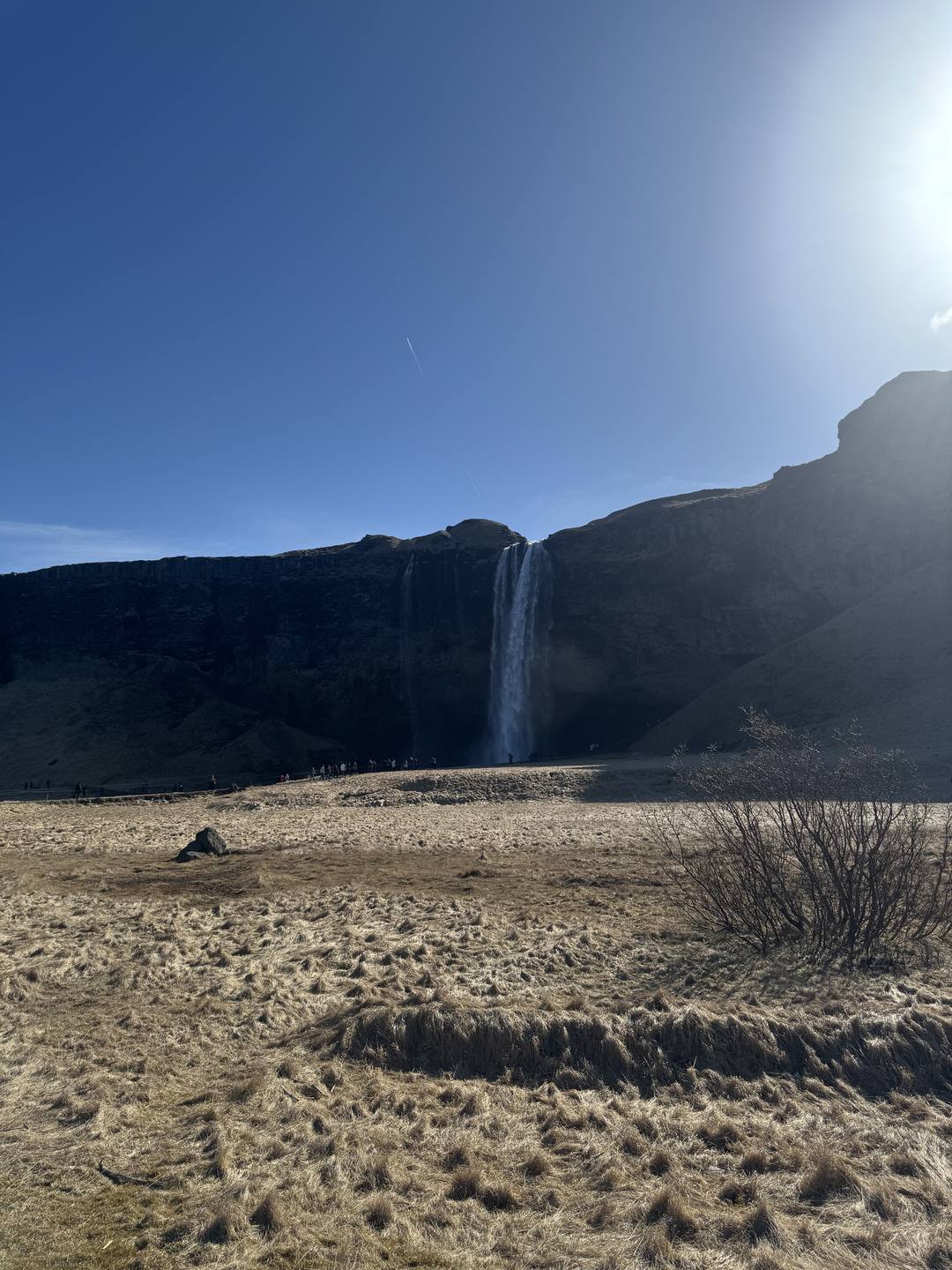
Standing in the middle, with the whole river folding over the lip above you, is the part people remember. The light comes through the water in a strange soft way, and when the sun is behind the falls you get a rainbow hanging in the mist that shifts as you move your head. Bring a camera and accept that it will get wet.
If there is any wind, and on this coast there usually is, the falls throw a fine rain that reaches the trail long before the curtain does. This is why I keep telling travelers that waterproof trousers matter as much as the jacket, something I go through properly in this guide on what to wear on the South Coast day trip. The people in rain trousers walk the path grinning. The people in jeans give up halfway.
Here is what the walk-behind actually involves, so nothing surprises you when you step off the bus:
| What | Detail |
|---|---|
| The path | A short loop of stone and dirt steps, up one side, behind the curtain, down the other |
| Surface | Slick, uneven, often running with meltwater; grippy shoes make it easy, smooth trainers slide |
| How wet you get | Soaked within seconds if there is any wind; front on the way in, back on the way out |
| What to protect | Camera and phone in a pocket; a lens cloth is worth more here than a tripod |
| Winter | The loop usually ices over and gets roped off, so you admire it from the front only |
Where is the hidden Gljúfrabúi waterfall, and how do you find it?
Gljúfrabúi hides in a narrow gorge about a ten-minute walk north of Seljalandsfoss, roughly 150 to 600 metres along the same cliff, and both falls share one car park. To see it in full you wade a shallow stream through a slot in the rock into a mossy hidden chamber where the water crashes down from far above.
It is called Gljúfrabúi, which locals translate roughly as the "canyon dweller," and it earns the name. Instead of pouring down an open cliff, it hides inside a narrow gorge behind a mossy wall of rock, half-tucked away so most of the crowd walks right past the turn without ever knowing it is there.
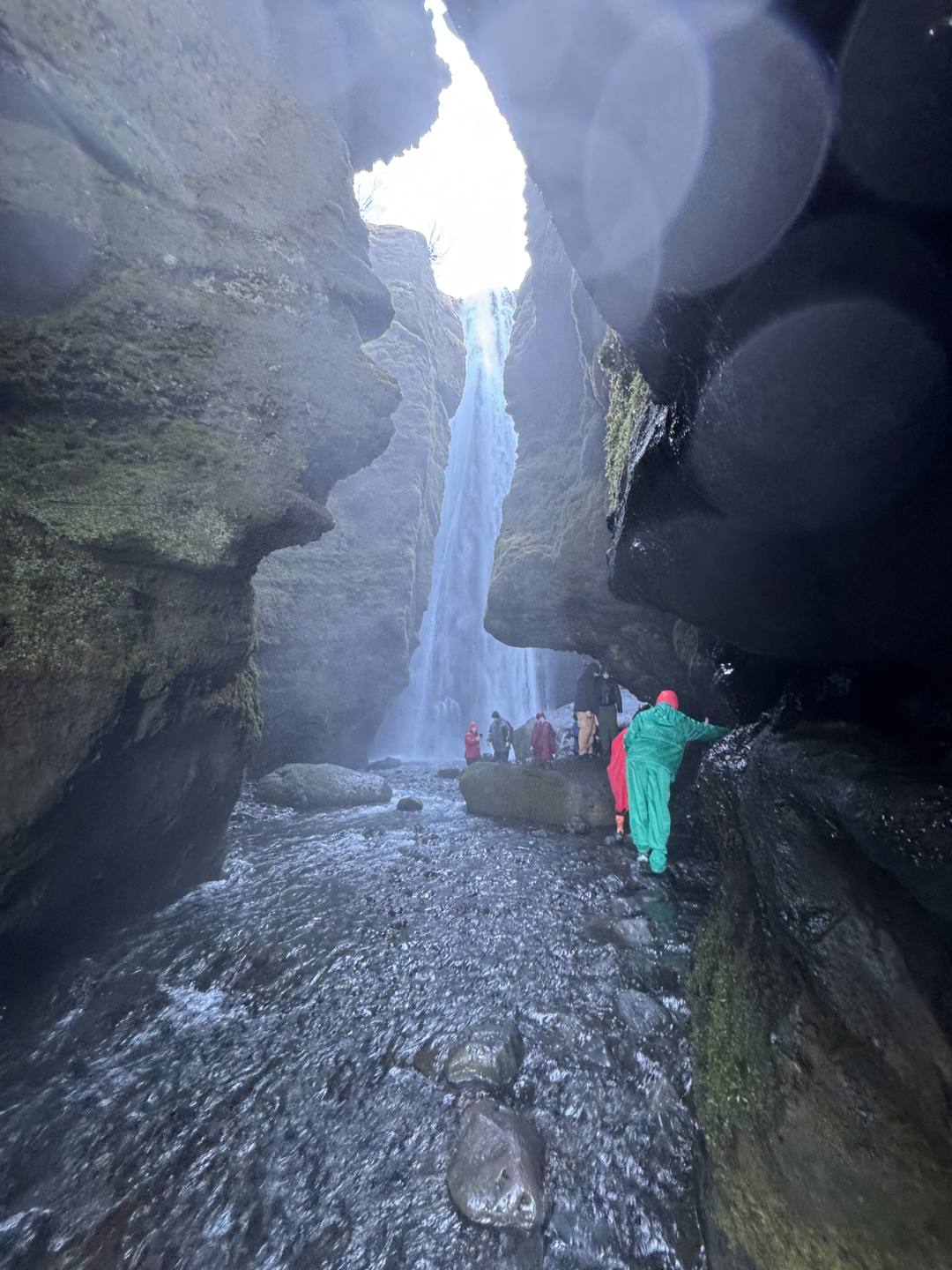
To actually see it you have to commit. A shallow stream runs out of the cleft, and reaching the fall means wading up the streambed through the gap, hopping between rocks with the water sometimes over your shoe. Inside, the canyon opens into a small chamber with the waterfall crashing down at the back, mist filling the space, and daylight dropping in from a slot far above. It feels like a secret because most visitors never walk the extra few minutes to find it. On a busy midday you can go from shoulder-to-shoulder crowds at Seljalandsfoss to near-solitude in that gorge just by turning north and getting your feet wet.
The two falls could not be more different in character, and knowing that before you arrive helps you split your time well:
| Feature | Seljalandsfoss | Gljúfrabúi |
|---|---|---|
| The view | Open cliff, water falls in full view from the road | Hidden in a gorge, only partly visible from outside |
| How you see it | Walk the loop behind the curtain | Wade a shallow stream through a slot in the rock |
| Crowds | Busy, the main draw | Quiet, most people miss it |
| How wet you get | Soaked from spray | Wet feet from the stream, mist inside |
| On the tour | The reason the stop exists | Not a listed stop, reachable in your free time |
One thing I want to be straight about: Gljúfrabúi is not an official stop on the day tour, and no guide is going to march you there. It sits on the same site as Seljalandsfoss, so it is easy to reach in your free time, but whether you get to it depends on how you spend your minutes here. That is your call to make, not the schedule's.
How long do you get at Seljalandsfoss, and how should you spend it?
On the small-group day tour the stop runs around forty-five minutes, which is enough for both falls only if you move with purpose. Walk the path behind the main curtain first while your camera is dry, then head straight north to Gljúfrabúi before the time runs down. Skip the coffee queue.
On the Full Day Small-Group Tour from Reykjavík, that forty-five minutes sounds generous until you realize how much is packed into it: the walk up, the loop behind the curtain, photos, drying off, and the optional push to the hidden fall. Pick your priorities before you step off the bus. If you only manage one, walk behind Seljalandsfoss. If you have any legs left, Gljúfrabúi rewards them more than almost anything on the route.
Here is roughly how I would carve up the time if I were riding along as a passenger rather than driving:
| Minutes | Do this |
|---|---|
| 0 to 5 | Walk up from the car park, get your waterproofs sorted, camera stowed |
| 5 to 20 | Do the loop behind Seljalandsfoss while your lens is still dry |
| 20 to 35 | Head north along the cliff and wade into the Gljúfrabúi gorge |
| 35 to 45 | Dry off, last photos from the front, back to the minibus on time |
Picking a day for both falls? Choose from the tour's scheduled departure days
Scheduled departure dates from the operator's Viator calendar. Availability for your date and the final price are confirmed on the listing.
Check Live Availability & Prices →The departure calendar could not load just now. Check dates and prices directly on the listing:
Check Dates & Prices on Viator →When should you go, and how bad are the crowds?
Midday is the busiest window, because this is the first major stop out of Reykjavík and buses stack up between late morning and early afternoon. Crowds do not ruin it, they just cost you patience. Early and late are quieter with better light, and winter often closes the walk-behind path entirely for ice.
The base of Seljalandsfoss fills with people angling for the same photo through the middle of the day. Early and late are quieter and the light is better, low and golden rather than flat. Winter changes the calculus completely: the path behind the falls often ices over and gets roped off for safety, so in the cold months you may only admire it from the front. Summer opens the loop fully but brings the crowds. That trade-off is part of the wider question of whether the whole trip earns its place in your itinerary, which I weigh up in is a South Coast day trip worth it.
Come dressed for water and the whole stop changes character. In good waterproofs you walk the path relaxed, wade the canyon, and enjoy the spray instead of dreading it. If you want to lock in a small-group day that gives you real time at both falls, you can check the live dates and price on the operator's Viator listing. From here the tour rolls on to Skógafoss, the taller sixty-metre curtain down the road, and if you are wondering whether that one is worth the staircase to the top, I answered that in is Skógafoss worth it.
There is a longer list of small things I learned the hard way on this route, from timing to footwear to managing the hours in the vehicle, gathered in what I wish I knew before my South Coast tour. But if you take one thing from this page, make it this: pack for rain, find the second waterfall, and give yourself the extra five minutes. Almost nobody does, and almost everybody who does calls it their favourite stop of the day.
Can you really walk behind Seljalandsfoss?
Yes. A footpath loops from one side of the falls to the other, passing directly behind the curtain of water. It involves uneven, slippery steps and you will get wet from the spray, so waterproofs and grippy shoes make it far more enjoyable. In winter the path often ices over and gets closed for safety.
Is Gljúfrabúi part of the tour?
No, it is not an official listed stop. Gljúfrabúi sits on the same site, about a ten-minute walk north of Seljalandsfoss, so it is easy to reach during your free time at the stop, but no guide will take you there. Whether you see it depends on how you spend your roughly forty-five minutes here.
How do you get to the hidden waterfall?
Follow the base of the cliff north from the main falls until you reach a narrow gorge with a stream running out of it. To see the waterfall inside, you wade up the shallow streambed through the gap, stepping between rocks. Expect wet feet and a lot of mist, and wear footwear you do not mind soaking.
How long do you get at Seljalandsfoss?
The small-group day tour allows around forty-five minutes at the stop. That is enough time to walk the path behind the main falls and reach Gljúfrabúi if you move efficiently, but not enough to do both slowly and also stop for a long coffee. Decide your priorities before you leave the bus.
Booking
Book The Day That Starts At The Falls
Iceland South Coast Full Day Small-Group Tour
★ 4.8 · 6,610 Viator reviews · Your Day Tours
Both falls share one car park and the small-group day gives the stop about forty-five minutes, enough for the walk behind the curtain and a push to the hidden one if you move with purpose.
- About 10 hours
- Max 19
- Free cancellation up to 24 hours before
Check Live Availability & Prices on Viator →
Affiliate link: if you book through it we may earn a commission at no extra cost to you. How this works.
Not sure which option fits? Answer 3 quick questions
General guidance, no answers needed: the featured small-group day fits most first visits to the South Coast. Pick a month and your priorities for a tailored pick, and confirm dates and restrictions on the listing.
Compare the other options (2)
Each is a separate Viator or Expedia booking, not part of the featured day tour.
Sólheimajökull Small-Group Glacier Hike — Crampons, helmet and a certified guide on the lower tongue of the glacier the day tour only views. ★ 4.8 · 565 Viator reviews · 3-4 hours
Katla Ice Cave Under the Volcano, from Vík — Super-jeep from Vík up under Mýrdalsjökull into the ice cave beneath the Katla volcano. ★ 4.7 · 1,193 Viator reviews · From Vík
Have dates for your Iceland trip yet? Check the departure dates for your window now, then plan the rest of your days around the coast.
Pick your date
Scheduled departure dates from the operator's Viator calendar. Availability for your date and the final price are confirmed on the listing.
Check Live Availability & Prices →The departure calendar could not load just now. Check dates and prices directly on the listing:
Check Dates & Prices on Viator →